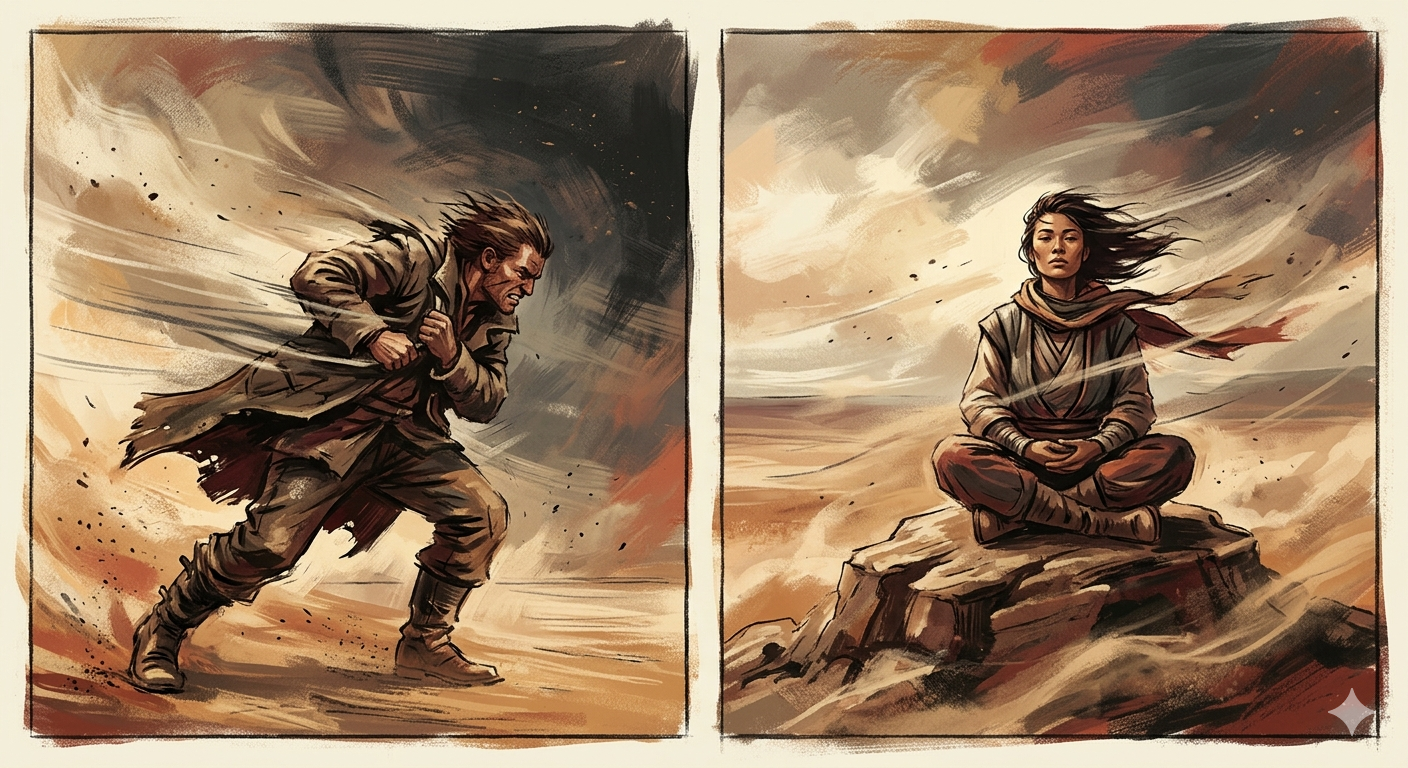
There's a particular kind of argument that comes up whenever East and West compare themselves to each other: who is tougher? It's usually framed as a competition, and it usually misses the point entirely. The more interesting question isn't who is tougher. It's: tough at what, and why?
What shaped Western toughness
European history for most of recorded time was one of constant inter-group competition. City-states, kingdoms, tribes, and empires were in near-permanent conflict. Western toughness, at its core, is resistance to external force. Saying no. Holding your ground. Not backing down when challenged.
What shaped East Asian toughness
East Asian civilisations — particularly those shaped by dense agricultural systems in limited arable land — faced a different survival challenge. The toughness that emerged is internal. Enduring discomfort without complaint. Suppressing immediate desires for long-term stability. Continuing to function within a system even when you disagree with it.
This is equally demanding — arguably more so — but it's invisible to the Western framework that defines toughness as visible resistance.
Neither is complete
The Western model produces individuals who are hard to bully but can be catastrophically bad at cooperation. The East Asian model produces societies with extraordinary collective endurance but can struggle when individuals need to challenge systems that have genuinely failed. The person who has access to both is rarer and more adaptable than either tradition alone produces.